Four Seasons AI Landscape Prompts
Published on October 19, 2026
A four-season landscape series works when the place remains recognizable as the weather and vegetation change. Start with one clear view, then separate permanent landmarks from seasonal details. With AI image generation, a forked tree, a stone bridge, and a stream can become a year of imagined scenes. The aim is continuity across the set, not four unrelated landscapes with different colors.
Generate YouTube transcripts for FREE.
Access all transcript languages, with easy copy and clickable timestamps!
Spring Establishes the View for the Whole Series
Choose a scene you can describe without mentioning the season. Here, a maple stands beside a winding stream, with a small stone bridge farther back. The tree's fork and the bridge's single arch give the eye recognizable shapes. The water connects foreground and distance, making the arrangement easy to follow.
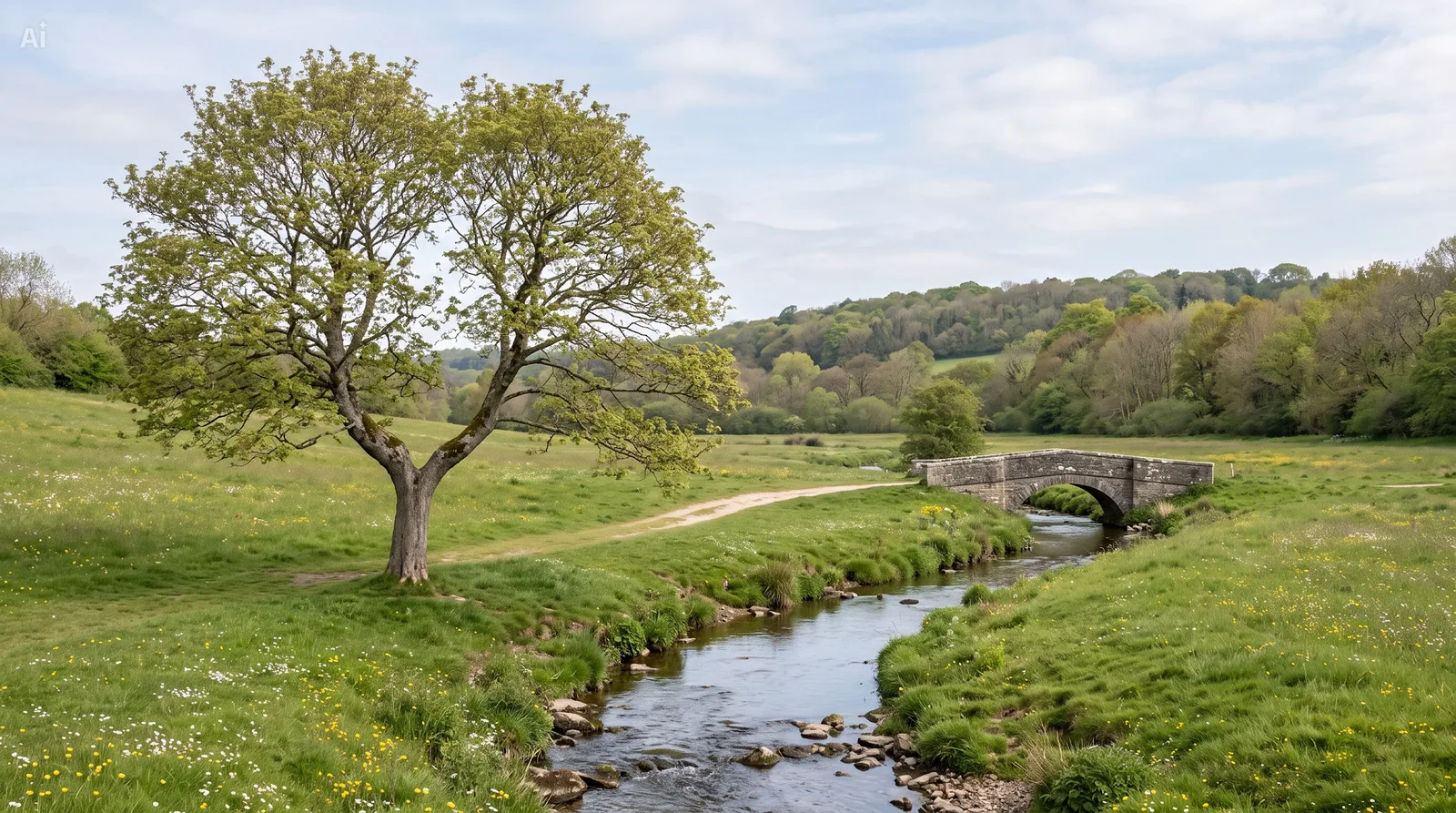
Open CapCut's image creation tool to develop a starting view from text. A useful AI art prompt names the arrangement before the foliage:
“Horizontal photorealistic countryside scene. One mature maple with a low Y-shaped trunk fork stands on the left bank. A narrow stream curves from the foreground toward a small gray-stone bridge with one round arch in the middle-right distance. A dirt path leads toward the bridge. Low meadow hills, eye-level view, fresh light-green spring leaves, short grass and soft morning daylight. No people or buildings.”
Review the first image before moving to summer. Save a starting view whose bridge, banks, and tree have clear positions. A complicated scene with overlapping branches and several crossings gives you more details to track through every later version.
Summer Changes the Canopy Without Moving the Tree
Once the scene is established, describe summer as a change to that view. Keep the trunk and main limbs where they are, then ask for fuller foliage. Deeper green leaves and denser grass can distinguish the season without changing the camera position or adding new scenery.
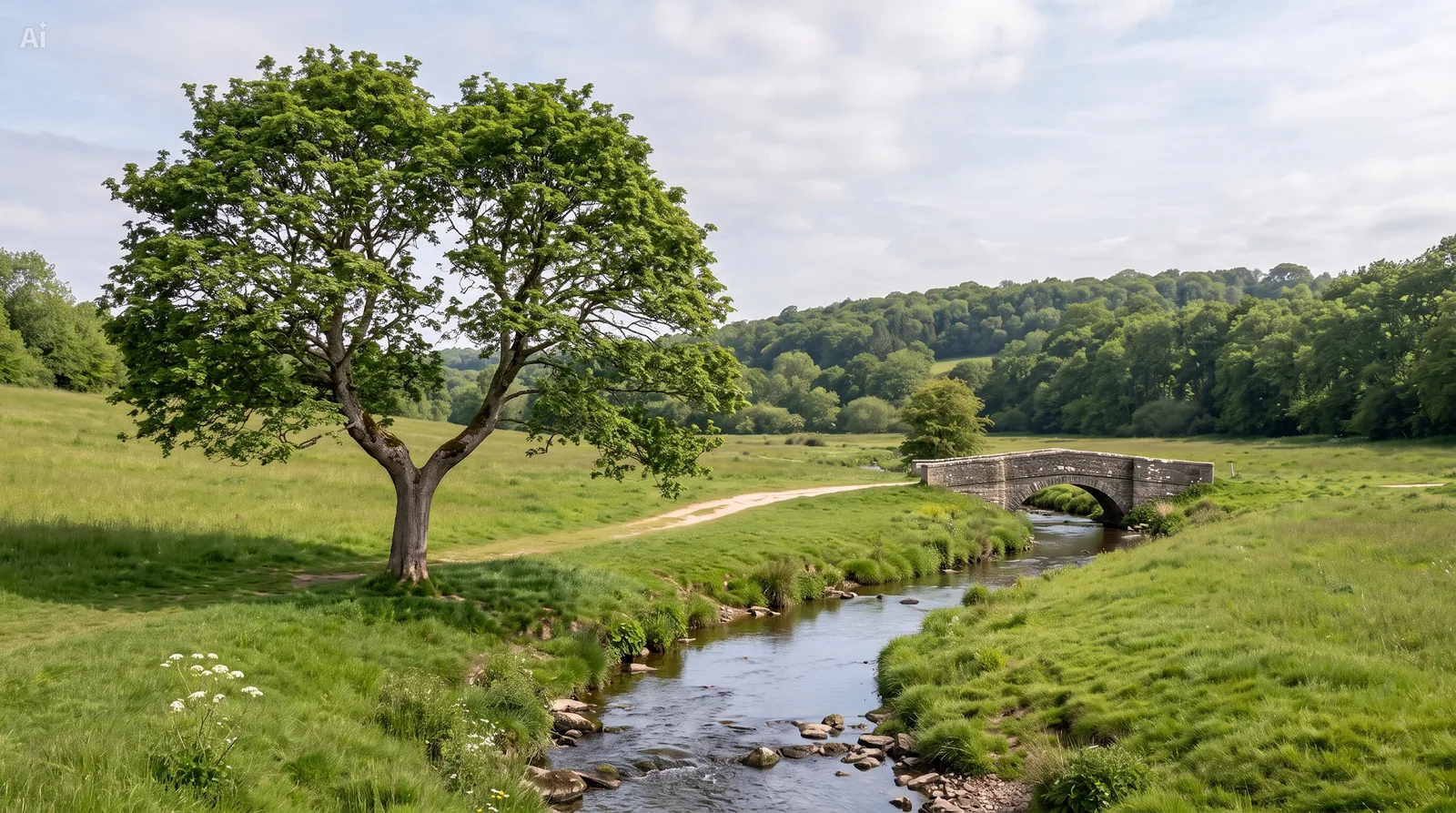
CapCut supports further prompts to refine generated images. In the same project, add the spring result to the prompt input as a reference and make the seasonal change explicit:
“Create a summer version of this landscape. Preserve the viewpoint, tree position, low trunk fork, stone bridge, stream course, and distant ridge. Give the maple a fuller crown of deep-green leaves and the meadow thicker summer grass. Use clear, natural daylight. Keep the bridge arch visible and retain the original horizontal framing.”
The distinction between spring and summer should come from growth as well as hue. Simply making the spring leaves darker leaves the silhouette almost unchanged. A fuller canopy can cover more of the sky, while the visible trunk still links the images.
Check the gap between the tree and bridge. It is a useful reference because it combines two permanent features rather than relying on a leaf edge. The canopy can expand into that gap slightly; the bridge itself should not slide closer to the trunk. Also compare the stream where it reaches the bottom edge. A new entry point can make the camera seem to have moved.
Avoid asking for an entirely different time of day at this stage. A dramatic sunset would change several things at once and could overshadow the seasonal comparison. Keep the light straightforward while establishing the sequence, then decide whether a stronger atmosphere serves the set.
Fall Needs Fallen Leaves as Well as Warm Color
An autumn view becomes more convincing when the canopy and ground tell the same story. Some leaves can remain on the branches while others collect below. This gives the change a physical presence beyond an orange color treatment.
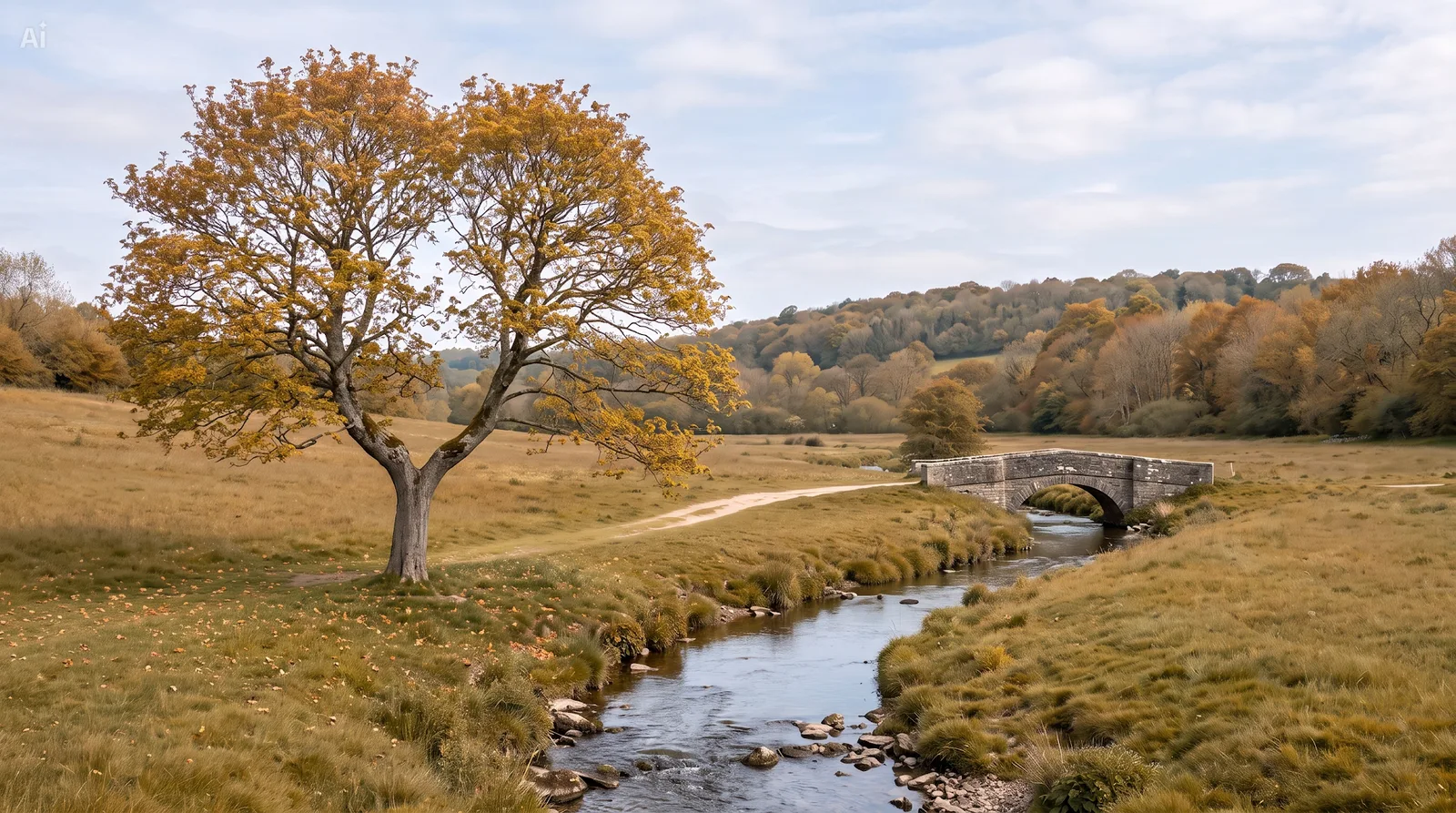
For this version, ask for a partly thinned canopy with amber and muted red foliage. Keep the trunk fork visible and let a scattering of leaves gather beneath the tree and along the path. Leave enough grass exposed to avoid turning the entire meadow into a continuous carpet of leaves.
Try a follow-up such as:
“Show the same maple and stone bridge in mid-fall. Preserve the original camera view, bridge shape, stream banks, and main tree limbs. Change the foliage to a natural mix of amber and muted red, with small gaps where leaves have fallen. Scatter fallen leaves under the tree and beside the path. Keep the stream open, the stone gray, and the grass subdued green.”
The last sentence separates seasonal changes from materials that should retain their identity. Gray masonry may pick up warmer light, but it should still look like stone. Water can reflect the foliage while retaining its own depth and surface texture. An orange cast applied equally to everything makes those differences harder to see.
Return to the spring reference for this version rather than relying only on the summer result. Then compare the sequence as a whole. Read the outline of the bridge first, followed by the tree's lower branches. If a permanent feature has shifted, address that relationship before asking for more leaf detail. A targeted instruction might be: “Restore the bridge's original distance from the tree; keep the autumn foliage.”
Winter Reveals the Structure Beneath the Leaves
The winter view has the least foliage to hide the tree's shape. Use it to check whether the series still belongs to one location. The major branches should connect naturally to the familiar fork, and the stream should continue through the same bridge opening.
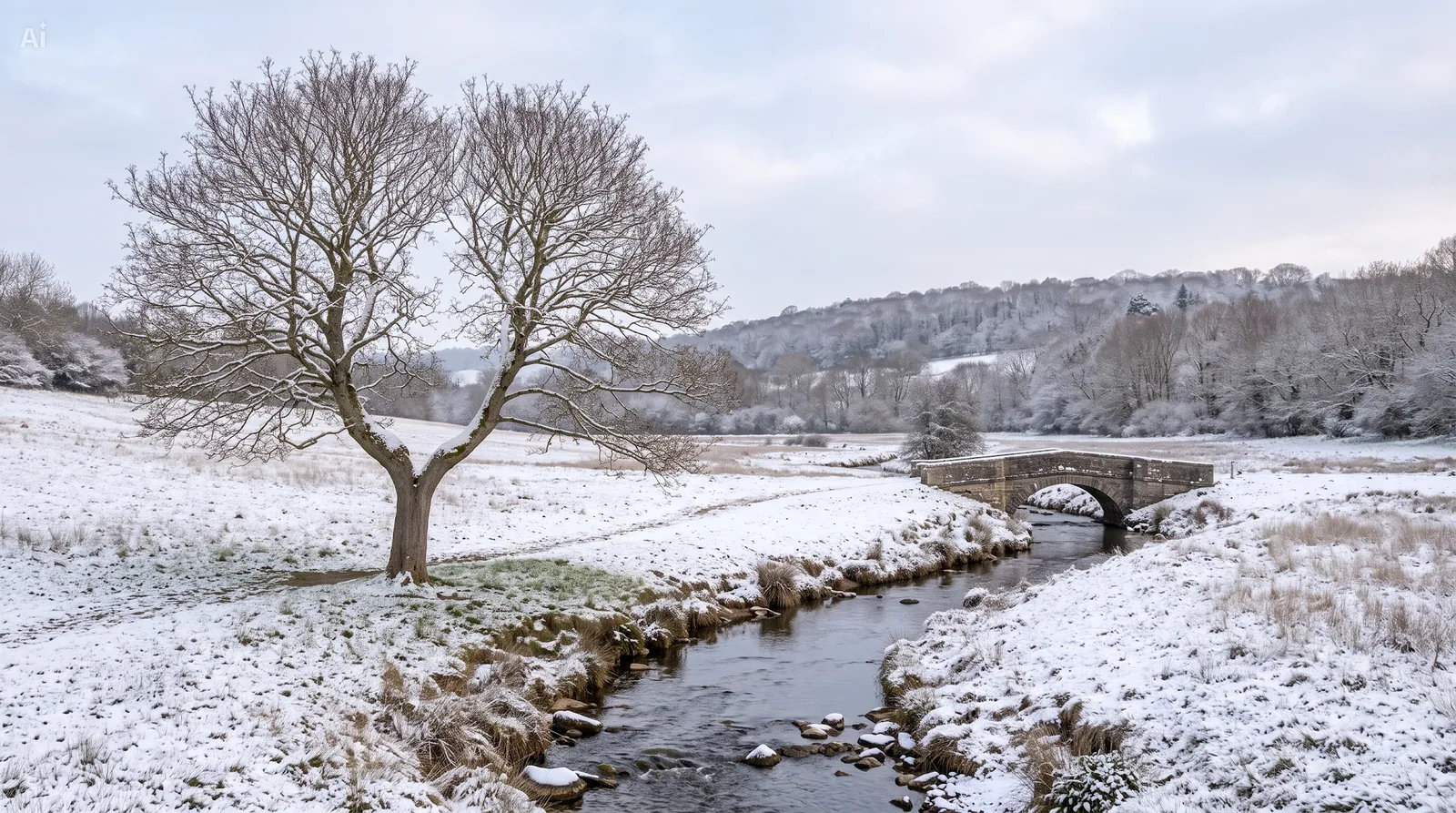
Use the spring reference again. For a mild snowy day, request bare branches, light snow on the grass and bridge parapets, and exposed dark water. Keep the snow shallow enough for the banks and path to remain readable. A heavy drift that conceals every landmark would make continuity harder to judge.
A focused winter prompt is:
“Turn the same landscape into a quiet winter morning. Preserve the camera position, maple trunk and main branches, stone arch, stream bends, and distant ridge. Remove the leaves. Add a light covering of snow to the meadow, path edges, and top of the bridge, with subtle snow on upward-facing branches. Keep the stream flowing and unfrozen. Use soft cool daylight and natural gray stone.”
Before downloading the set from CapCut, compare all four images at the same display size. Look for a stable horizon, the same tree-to-bridge relationship, and a watercourse that follows the same route. Seasonal differences should be easy to name without needing the filenames. Keep the original files so later crops do not become the only copies of your scenes.
Summary
A coherent four-season series lets the location stay familiar while growth, fallen leaves, and snow change its appearance. Establish the landmarks first and judge each seasonal version against them. Explore AI image generation with CapCut to build your own sequence, starting with one landscape worth returning to.
Generate YouTube transcripts for FREE.
Access all transcript languages, with easy copy and clickable timestamps!